鬱ふたたび|戻ってきたあの暗闇(English below)

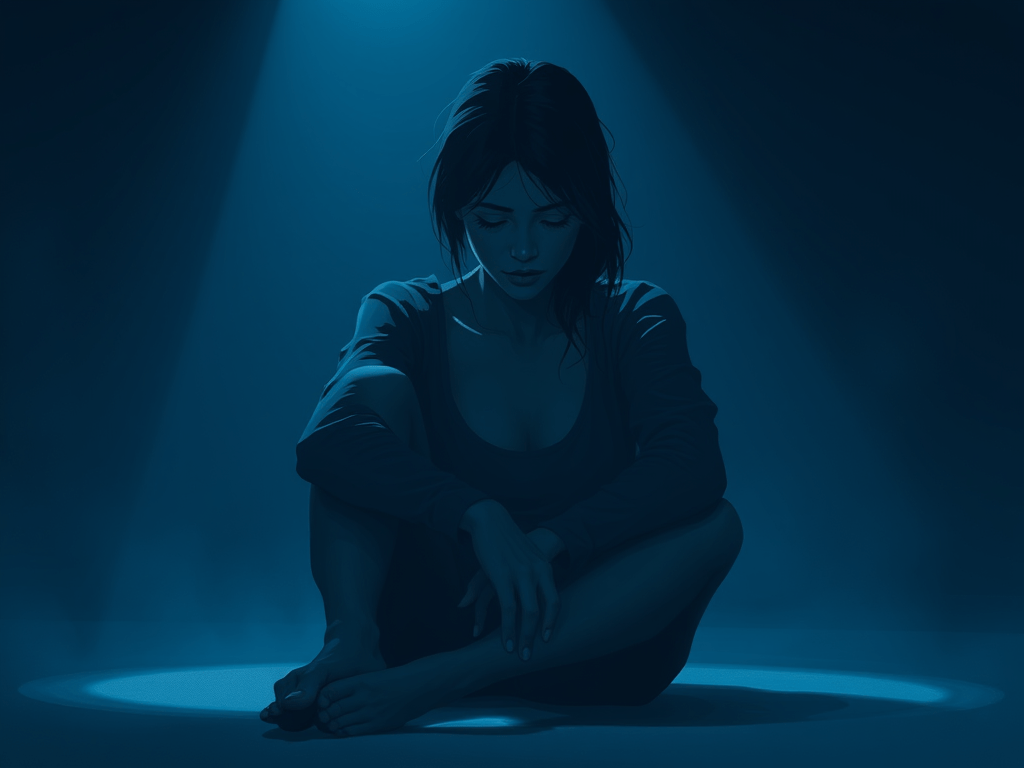
また来たの?ねぇ、もうやめて。

※このブログ記事は日本語と英語で書いています。
English version is below. Please scroll down.

💫これは、今の職場に行くようになるまで、そして行ってからのお話です。

膝の手術で退院したあと、松葉杖が取れるまでは、軽い筋トレをしながら自宅療養していた。 でも、「このままじゃ家計がピンチ!」と思って、仕事を探すことに。
普通の仕事は無理だとすでに悟っていた私は、前に担当してくれていた相談員さんに連絡をとった。
そこから、A型事業所を探し始める――けど、どこも定員オーバー。順番待ちの状態。
「いやいや、待ってられんのよ!」と思った私は、車で1時間かかる隣の市の事業所まで見学へ。
そしたら、「あ、ここ、私に合ってる」って感じたの。
その場で体験予約 → 面接 → 合格。 そうして、働き始めることに。

🏢A型事業所ってなに?

簡単に言うと、「就労継続支援A型事業所」っていうのは、 障害や病気があって、すぐに一般企業で働くのが難しい人のための“働く場所”。 雇用契約があって、最低賃金も保証される。体調に配慮した働き方ができるところ。 私にとっては「社会復帰の第一歩」でもあった。

🚗初出勤、まさかの命の危機。

初日は、緊張か寝不足か…とにかく異様に眠かった。 朝、車に乗った瞬間からウトウト。 「気のせい、気のせい」と思って運転を始めたけど

―― 気づいたら蛇行して、反対車線に突っ込んでいた。 「死ぬ…」って、本気で思った。
なんとか職場にはたどり着いたけど、もうその日は頭が真っ白。 仕事自体は好きだった。合ってた。
でも、人と馴染めなかった。 しかも、「え、これ意地悪されてる…?」って感じる出来事もあった。 人がわちゃわちゃしてるの、私は苦手。
サビ管さんには「うちは狭いからね、気にしなくていいよ」って言ってもらえたけど、やっぱり心はざわついてた。

⏰起きられない朝、そして自己嫌悪。

「最初はこんなもん」
「慣れたら大丈夫」
と思い込んでいたけど―― 朝、本当に起き上がれなくなった。
頭では「行かなきゃ」とわかってるのに、体が動かない。
何度もアラームを止め、天井を見上げて、ただ時間が過ぎていく。
「これは違う、私が怠惰なだけ」 そう何度も唱えた。
でも―― 何かが、私を押さえつける。 重くのしかかってきて、体が動かない。
そのうち、
「私、ダメな人間だ…」
「怠けてる…」
「申し訳ない…」
と、 どんどん鬱の沼に沈んでいった。 結局、始めてから2ヶ月はほとんど出勤できず。 相談員さんと、サビ管さんに「今の状態どう?」と言われた。
「もうクビかもしれない」と不安で仕方なかった。
でも―― サビ管さんは言ってくれた。 「このまま、週4で年内やってみましょう。まずはそれからです」 クビじゃなかった。 あのときの安心感、忘れられない。

💑エリーの存在、そして少しずつ回復へ。

2ヶ月ほどして、少しずつ出勤できるようになってきた。
体調が安定してきたタイミングと、彼と会うようになった時期が重なる。
彼は、「え、どうしたの? 話しても大丈夫なら話してみて」と言ってくれた。 その「大丈夫なら」という前置きに、すごく救われた。 無理に聞こうとしないやさしさ。 ただ静かに、私の話を聞いてくれる存在。 まるで、自分のことのように考えてくれる。
そんな人がそばにいてくれたことで、私は少しずつ、心の整理ができるようになった。
職場のことも、いろんな人の特性や背景を想像できるようになった。
「自分が100%正しいわけじゃない」って、ちゃんと思えるようになった。 これは、完全に彼のおかげ。

⚔️鬱、撃退。

2ヶ月かけて、私は鬱から少しずつ抜け出した。
「なかなかの出来じゃないか」って、自分でも思った。
でも―― 今回の安定期は、短かった。

⸻ 鬱との戦い。今のところ、私の勝利です。 また来たの?って思った。 もうやめてよ、って思った。
でも今のところ、私の勝ち。

ではまた、サイレースの前に。

Depression Returns|The Darkness That Came Back Again

Subtitle: “You again? Please… stop.”

This is the story of what happened before I started working at my current place—and what happened after I did.

After my knee surgery, I was on home rest, doing light exercises until I could finally walk without crutches.
But I started to panic.
“If I stay like this, our finances are going to fall apart.”
So I decided to look for a job.

I already knew I couldn’t handle a regular job, so I reached out to my former counselor.
We began searching for an A-type support workplace, but everywhere was full—waiting lists everywhere.
And I thought, “I can’t wait that long!”
So I drove an hour to another city to visit one.

And the moment I stepped in, I felt it:
“This place fits me.”
I signed up for a trial, had an interview, and got accepted.
That’s how I started working again.


What is an A-type support workplace?

Simply put, it’s a “continuous employment support center” designed for people who find it difficult to work in a regular company due to illness or disability.
You have a formal employment contract, get paid at least minimum wage, and can work in a way that considers your health.
For me, it was my first step toward returning to society.


First day: almost didn’t make it alive.

My first day, I was either too nervous or too tired—I could barely stay awake.
The moment I got into my car, I started to doze off.
I told myself, “You’ll be fine,” and started driving…
and the next thing I knew, I was swerving into the opposite lane.

I really thought I was going to die.
Somehow, I made it to work, but my head was completely blank.

The work itself suited me. I liked it.
But I couldn’t get along with people.
And then the small things started to pile up—moments that made me think,
“Wait… are they being mean to me?”

I’ve never been good with noisy, crowded spaces.
My supervisor said, “It’s just a small room, don’t worry about it.”
But my heart stayed uneasy.


Mornings I couldn’t get up.

I kept telling myself, “It’s just the beginning. You’ll get used to it.”
But one morning, I couldn’t get up at all.
My brain said, “Go to work.”
My body said, “No.”

I kept hitting the alarm, staring at the ceiling, watching time disappear.
And then came the guilt.
“I’m lazy.”
“I’m useless.”
“I’m letting everyone down.”

Something heavy pressed down on me—like a shadow I couldn’t shake off.
That’s when the depression came back.

I barely showed up for two months.
When my counselor and supervisor asked, “How are you doing lately?”
I was terrified they’d fire me.

But instead, my supervisor said:

“Let’s try four days a week for now. Let’s start there.”

I wasn’t fired.
That relief—I still remember it vividly.


Ellie’s presence. My slow recovery.

After about two months, I started to go to work again.
My condition stabilized, and around that time—I met him.

He said,

“What’s wrong? If you’re okay talking about it, I’ll listen.”

That “if you’re okay” part meant everything.
No pressure. No judgment.
Just warmth.

He listened quietly, and for the first time, I felt understood.
Because of him, I began to sort through my emotions.
I started to see people differently—imagining their struggles, their pain.
And I realized, “I’m not always right.”

That was all thanks to him.


Depression, defeated.

It took two months, but I crawled out of the darkness.
I thought, “Hey, that’s pretty good progress.”
But then…
the stability didn’t last.


The battle continues—but I’m still winning.

When it came back, I thought, “Again?”
I wanted to scream, “Please stop.”
But this time—
I’m winning.

See you again,
before my Silece (night pill) kicks in. 🌙

【後編】躁と鬱を繰り返して、私は生きている(English below)

あのときの私は、”社長”になる気でいた

※このブログ記事は日本語と英語で書いています。
English version is below. Please scroll down.

躁のはじまりと「社長になる」宣言

私はうつ病として治療を受けていた。
でも、ある時から、”ちょっと違う”気分の波を感じるようになった。

ある日は何もできずに寝たきり。ほんとになにのできない。
体が石のようになる。全然面白くない。ただただ焦りと不安が増す。
でも別の日には、エネルギーが爆発して

「会社を立ち上げよう!」
「社長になるって、私、決めたから!」
「私はついにうつ病を克服した。もう病院に行かなくていい」

完全に本気だった。

寝られない夜と鬱の谷

予定がないと落ち着かなくて、メル友を大量に作って、朝から晩までやりとり。
夜になっても眠れず、ゲームやネットにどっぷり。すること、したいこと、やらなくちゃいけないことが多すぎて、24時間では足りなかった。

睡眠薬を飲んでも、寝られない。
ハイテンションのまま、朝になってしまうこともあった。
その反動で、また動けなくなる。
魂が抜けたような感覚、誰とも話したくない孤独。
寝なくては、寝なくては、が私を追い詰める。
薬を飲んでるんだから眠れるはず、焦る。

睡眠薬の事故と入院の決断

そんなある夜、私はやらかした。
色々家事をしていたら、寝る時間になっていた。
睡眠薬を遅く飲んだら、明日の朝早く起きれない、そう思った私は、
睡眠薬を飲んだ後にお風呂へ入ってしまった。
遅い時間になってもでてこない私を子どもたちが慌てて見に来てくれた。
ぶくぶくと沈んでいく途中だった。
子どもたちの声に、ハッと目が覚めた。

そして、次の日病院へ。先生が静かにいう。

「少し入院して、休みましょう」

入院生活と薬の選択

入院をきっかけに、親にも病気のことを伝えた。
とても心配してくれたけど、薬については反対された。

「そんなの飲まない方がいい」
「眠らなくても、そのうち眠れる」

確かに正論。でも私は、薬なしでは生活がままならなかった。
眠れないと仕事に行けないし、日常が崩れる。
だから私は、薬を選んだ。
睡眠薬を今も飲んでいることは親には話していない。
入院は、1か月だった。その間に、薬の調整もして、私に合ったものになった。
病室にはベッドとタンスしかなかった。入院するときは荷物チェックも行われた。
危険物はすべて没収。
病棟にはいろんな人がいた。絶対に私は病気ではない。そう思えた。
天井を見て過ごす毎日だった。
スマホの使用はおっけいだったけど、特別したいこともなかった。
食事は美味しくなかった。これを3食食べるのか、憂鬱。
寝る前の薬はナースステーションに行って薬をもらいその場で飲まなければならなかった。

ずっと見張られている

なんで、私はこんな生活をしているんだろう。とても惨めな思いがした。
とても長い1か月だった。退院の頃は気分がよかったので、すごくうれしかった。
母が迎えに来てくれて、ランチに連れて行ってくれた。
申し訳なさとありがたさでいっぱいだった。
1カ月働いていないので、生活がヤバかった。
あーどうしよう。家賃が、光熱費が、、、

A型事業所と障害者手帳

退院後は、先生にホームワーカーさんと今後のことを相談したらいいよと言われていた。
私は、元気になったし、早く社会に戻りたくて、私は「正社員で働きたい」と言った。
でも返ってきたのは、

「焦らず、まずはA型事業所から始めましょう」

正式には、「就労継続支援A型事業所」といって、障害や難病があって、一般企業で働くのが難しい人のための”働く場所”のことです。

そして言われた。
「障害者手帳を作りましょう」

ん?私って障害者なの?

心がザワついたけど、通ううちにそれも日常になっていった。
A型事業所では5年働いた。

でも、3年目ぐらいから変化があった。
なんか、自分の中に”誰か”いる感覚。
気づいたら、その誰かが勝手にしゃべっている、動いている。

最初は混乱したけど、やがてそれは「かみゅ」という存在だと気づいた。
今思えば、解離性障害の始まりだった。

そして今、波の中で

※ここから↓の話は今後また詳しく書きます。

A型事業所を退職の後、腰と膝の手術で再び入院。
「いびきがうるさい」と言われてたから、病室でも気になってしかたなかった笑

なんだかんだで、1年が経っていた。
ようやく「働こう」と思ったときには、また鬱の波が来ていた。

それでも私は、新しいA型事業所を探して、車で1時間かけて通った。
でも、また体調が崩れ通えなくなる。
眠れない、眠れない。
サイレースを2錠に増やして、やっと眠れるようになった。
そして、また少しずつ働けるようになった。

今、こうしてブログを書いている私も、たぶんその波の中にいる。
でも、それでいい。

完璧じゃなくても、途中で止まっても、私は今日を、ちゃんと生きている。

あ、やばい、サイレースの時間だ。
では、またサイレースの前に。

[Part 2] Living Through the Cycles of Mania and Depression

Back then, I was convinced I was going to be a “CEO.”


The Start of Mania and My “CEO Declaration”

I had been receiving treatment for depression.
But at some point, I began to feel a “different” kind of wave in my mood.

Some days, I couldn’t move at all. Really, nothing.
My body felt like stone. Nothing was fun. Just anxiety piling up.

But then other days, energy exploded out of me—

  • “I’m going to start my own company!”
  • “I’ve decided—I’ll be a CEO!”
  • “I’ve finally conquered depression. I don’t need doctors anymore.”

I was completely serious.


Sleepless Nights and the Pit of Depression

If I didn’t have plans, I felt restless.
So I made tons of online pen pals and chatted all day long.
At night, I still couldn’t sleep—gaming and surfing the net until morning.
There were too many things to do, too many things I wanted to do.
Twenty-four hours was never enough.

Even with sleeping pills, I couldn’t sleep.
Sometimes I stayed hyper until the morning came.
Then the crash: unable to move, hollow, wanting to see no one.
“I have to sleep, I have to sleep”—that thought trapped me.
I took pills, thinking they would work, but they didn’t. Panic only grew.


The Sleeping Pill Accident and the Decision to Hospitalize

One night, I messed up.
I had been busy with chores, and it got late.
I thought, “If I take my meds too late, I won’t wake up early tomorrow.”
So I took them—and then got into the bath.

When I didn’t come out for a long time, my kids rushed in.
I was half-submerged, slipping under.
Their voices jolted me awake.

The next day, the doctor said quietly:

“Let’s admit you for a little while so you can rest.”


Hospital Life and Choosing Medication

During hospitalization, I finally told my parents about my illness.
They worried, but opposed the meds:

  • “You shouldn’t take that stuff.”
  • “If you don’t sleep, you’ll eventually fall asleep naturally.”

They weren’t wrong. But without meds, I couldn’t live my daily life.
If I couldn’t sleep, I couldn’t work.
So I chose medication.

I never told my parents I still take sleeping pills.

I stayed in the hospital for one month.
During that time, my meds were adjusted and finally matched me better.

The ward room only had a bed and a dresser.
Upon admission, a baggage check—anything dangerous confiscated.

There were all kinds of people on the ward.
“I’m definitely not sick,” I thought stubbornly.

I spent days staring at the ceiling.
Smartphones were allowed, but I barely touched mine.
Meals were bland, joyless. Eating them three times a day was depressing.

At night, I had to walk to the nurse’s station to take my pills in front of them.
Always being watched.

I often wondered, “Why am I living like this?”
That month felt endless.

When discharge finally came, I was genuinely happy.
My mother picked me up and even took me out for lunch.
I felt both guilty and grateful.

But after a month without working, my life was collapsing.
Rent, utilities… how would I manage?


The A-Type Facility and the Disability Certificate

After discharge, the doctor told me:
“You should talk with a social worker about your future.”

I was eager to get back to society, so I said,
“I want to work full-time again.”

The reply:
“Don’t rush. Let’s start with an A-type support facility.”

Formally called a “Type-A Continuous Employment Support Facility,”
it’s a workplace for people with disabilities or chronic illnesses who find it difficult to work in regular companies.

Then the doctor said,
“Let’s apply for a disability certificate.”

Wait… me? Disabled?

My heart wavered, but as I continued attending, it became part of daily life.
I ended up working there for five years.

But around the third year, something changed.
I started to feel like “someone else” was inside me.
Sometimes, that someone spoke or acted on their own.

At first, I was confused.
Eventually, I realized: that presence was “Camyu.”
Looking back, it was the beginning of dissociative disorder.


And Now, Still in the Waves

(From here on, I’ll write in detail another time.)

After leaving the A-type facility, I had more surgeries for my back and knee.
Even in the hospital, my snoring made me self-conscious.

Time slipped by—before I knew it, a year had passed.
When I finally thought, “I can work again,” another wave of depression hit.

Still, I found another A-type facility, driving an hour each way to attend.
But my health collapsed again, and I couldn’t keep going.

No sleep, no rest.
Finally, I increased my Silece (Flunitrazepam) to two tablets—and at last, I could sleep.
Little by little, I managed to start working again.

And now, here I am, writing this blog.
Most likely still within the wave.

But that’s okay.

Even if I’m not perfect, even if I stop halfway,
I am still living today, properly.

Ah—time for Silece.

See you before the next dose.